





Read the Full Series
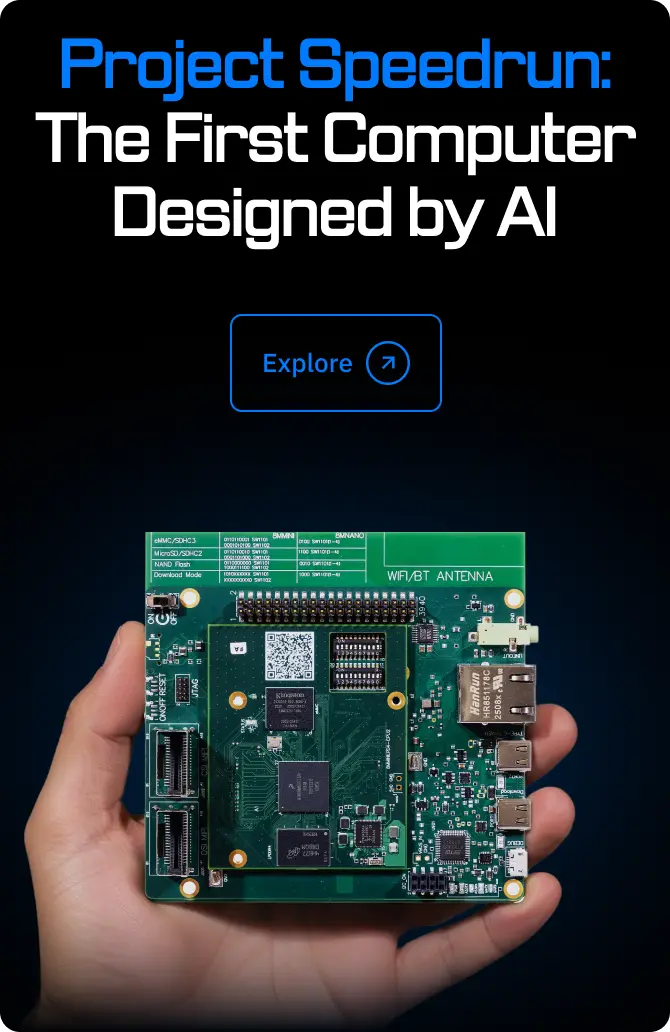
This article is one part of a walkthrough detailing how we recreated an NXP i.MX 8M Mini–based computer using Quilter’s physics-driven layout automation.
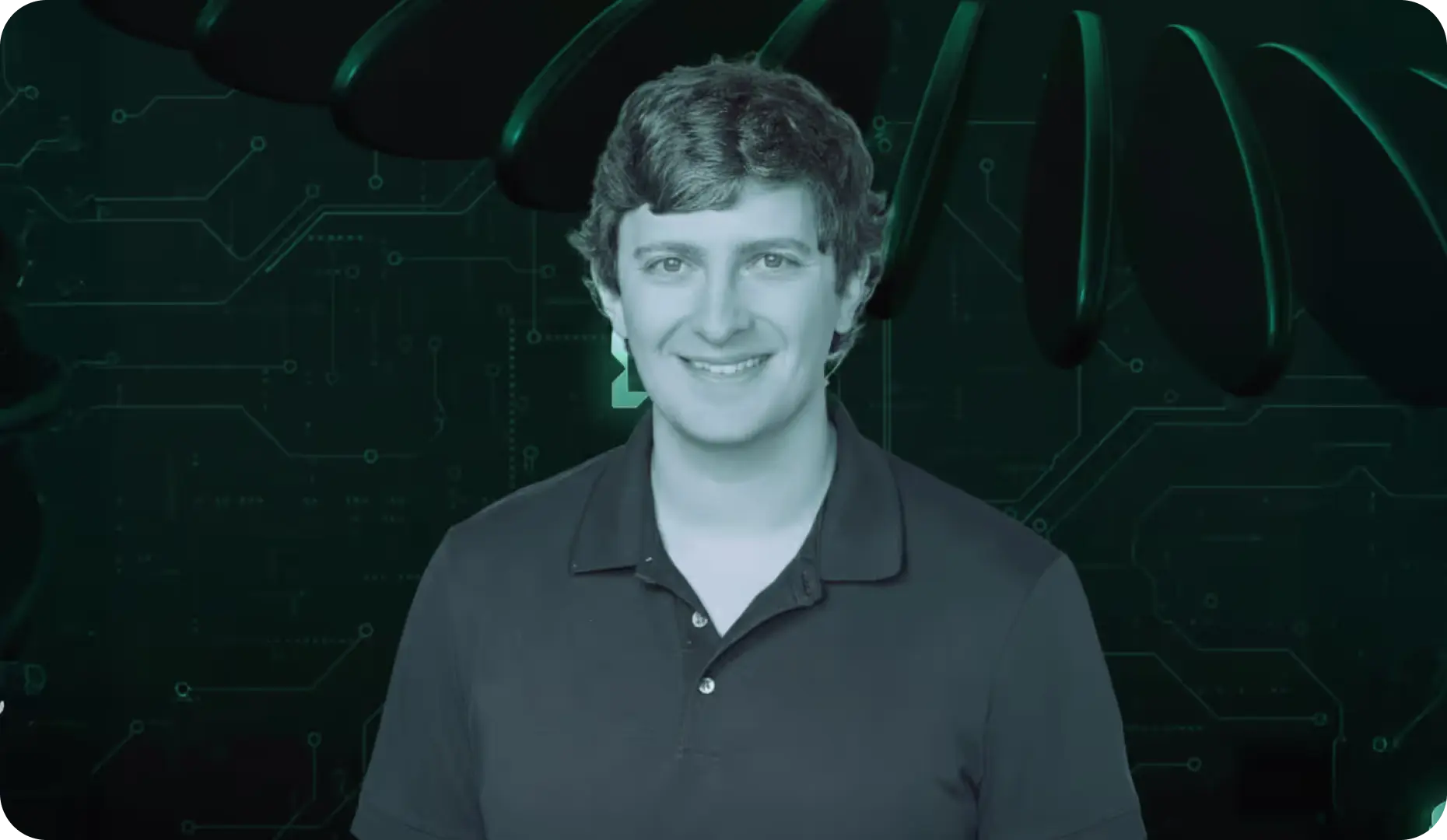
Fariz Rahman has been shaping the machine learning space since his university days, when a small open-source project called Keras became his gateway into a career that has spanned startups, open-source ecosystems, and now Quilter. “That product was Keras and I started contributing to Keras and soon became one of the top contributors. And then, you know, it got sort of acquired by Google and stuff and that gave me a lot of credibility in the ML open source ecosystem.” His journey reflects what drives Quilter itself: curiosity, persistence, and the courage to take on the “impossible.” Humans in the Loop shows how people like Fariz give depth and character to technology, making it more than just code.
Origins
Fariz has been coding nearly his whole life. “I’ve been coding since I can remember like, like fifth grade… back then I had really strict curfews at home. You know, like I could use the computer only during the weekends. So I would write code on paper and… give it to my friends to compile and give the output so that by the weekend I have code that I can actually run.”
What began as a workaround for restrictions became a discipline: translating curiosity into tangible results. That method of “learning by building” shaped his path. “For me, code is the ground truth… if I can fire up my code IDE and prototype it, that would usually expose any holes in my understanding.”
Journeys in Engineering
His contributions to Keras set the stage for a career in ML tooling and infrastructure: “Since then I’ve been in a bunch of ML ops, ML tooling companies...” Each role deepened his grasp of open-source communities and engineering rigor.
At Quilter, he’s wrestled with problems that blur the line between software and hardware. “There’s the interesting problem of rasterization… in the real world you have real numbers and in the computer world we have a fixed number of pixels. So you had to translate that… but for Quilter we had to do that for the layout. But then you had to actually go back to the real world and print the board. Right. So you have a two-way transformation.”
This ability to take abstract concepts and stress-test them against reality has defined his engineering philosophy. “Even in school, instead of just reading textbooks, what I would do is try to make my own textbook… I do the same thing with code and math at work. So it has worked for me.”
Why Quilter?
Coming from pure software, Fariz admits he was skeptical about joining. “With joining Quilter I was kind of skeptical because, you know, my electronics isn’t the best. Like I sort of hated electronics. So that was my first question to Sergiy, like how much of domain expertise do you expect? And it was like almost nothing. And I was like, yeah, that’s exactly what I’m looking for.”
What won him over was both the technical challenge and the boldness of the mission. “All of [the electronics people I asked] said, you know, this is like practically impossible. There’s a lot of manual work that goes into it. Science, it’s an art… and then I knew this is exactly the kind of company I need to work for. Because that’s what people say every time when AI breaks into anything. First they say it’s not possible, then they say, okay, it’s technically possible, but there are limitations.”
On competition, he’s clear: “I think like what we have right now itself is way ahead… in terms of technology and hiring the right people and having the right talent, I think we are there. So it’s only a matter of time and execution.”
Beyond the Workbench
Fariz is not all code and layout transformations. “So I go to the gym, I wrestle a little bit, I play chess… I’m into cars. I’m into motorbikes. A couple of motorbikes. I have a bit of a sports car, so you know, going on rides and that sort of thing.”
A Line to Remember
“The way you do one thing is how you do everything.”